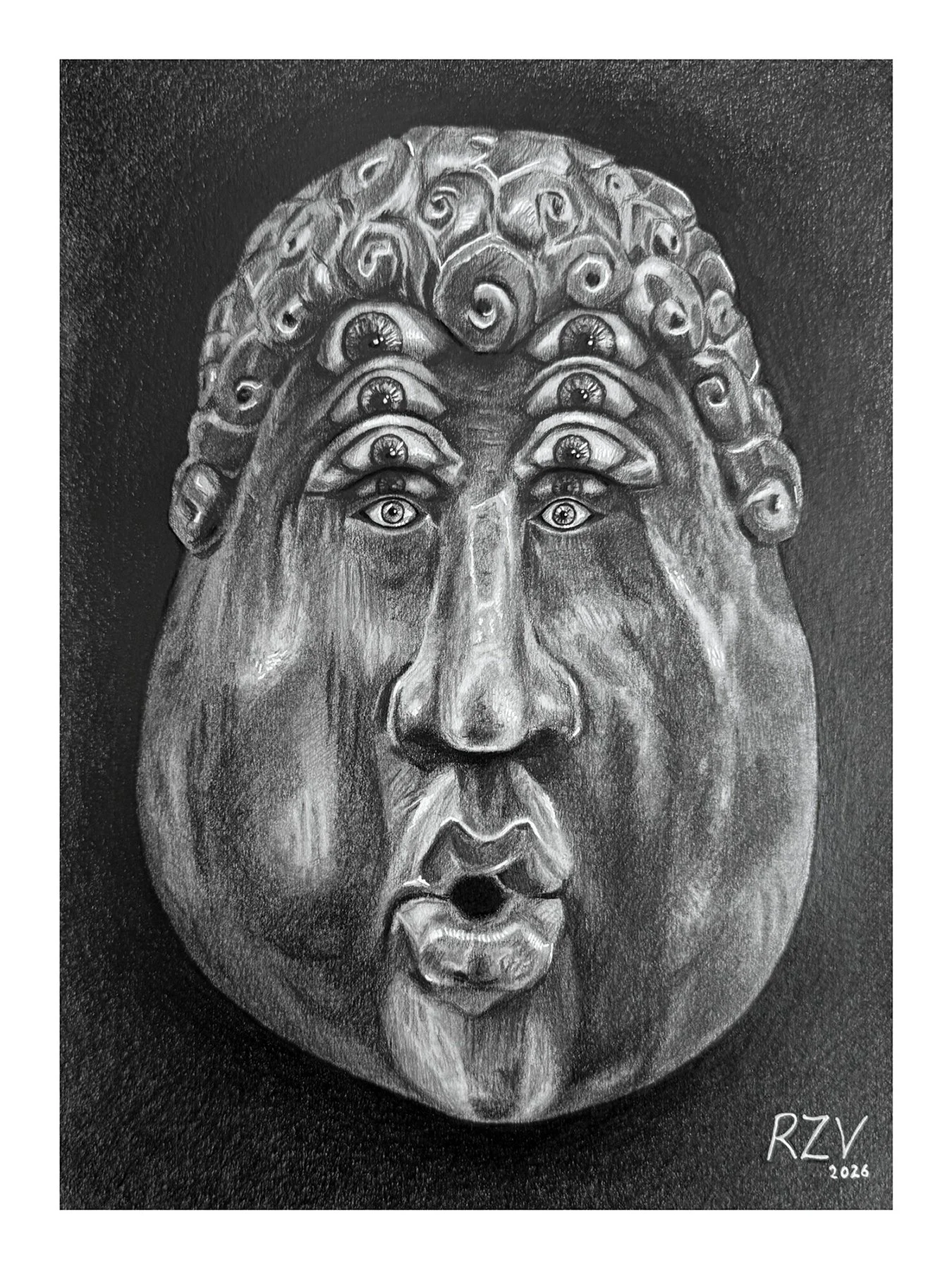
MAHSK SERIES
MAHSK takes its name from mask, with the letter H representing Human, Hand and Huichol—connecting the act of human creation with the encounter that first sparked the series.
At its core, MAHSK uses the human face as a recurring sculptural form through which the artist explores the human experience. Instantly recognizable yet open to abstraction and reinterpretation, the face becomes a canvas for ideas, emotions, observations, and personal perspectives. Each iteration retains the familiarity of the human form while transforming it into a distinct visual expression.
The initial idea emerged from the artist’s travels to Mexico, where he encountered the striking beauty of large wooden face sculptures known as soplones, adorned with intricate Huichol (Wixárika) beadwork. Created by the Indigenous Wixárika people, this beadwork tradition involves individually placing multicolored beads into beeswax and pine resin, requiring remarkable patience, precision, and craftsmanship.
The encounter served as a starting point, not a template. MAHSK does not seek to reproduce Huichol imagery or techniques, but instead develops an independent visual language through the artist’s own perspective and creative process. Each mask becomes an exploration of his curiosity, moving across subjects such as nature, the elements, love, connection, art, culture, and influential ideas and figures.
These masks are not intended to be worn. They are objects of interpretation—expressions of how the artist observes, questions, and experiences the world. Ultimately, MAHSK is an evolving study of the human perspective, where the familiar form of the face becomes a vehicle for exploring the many things that shape us as human beings.